
A Multilateral Pathway to Eradicating Forced Labor, Modern Slavery and Human Trafficking
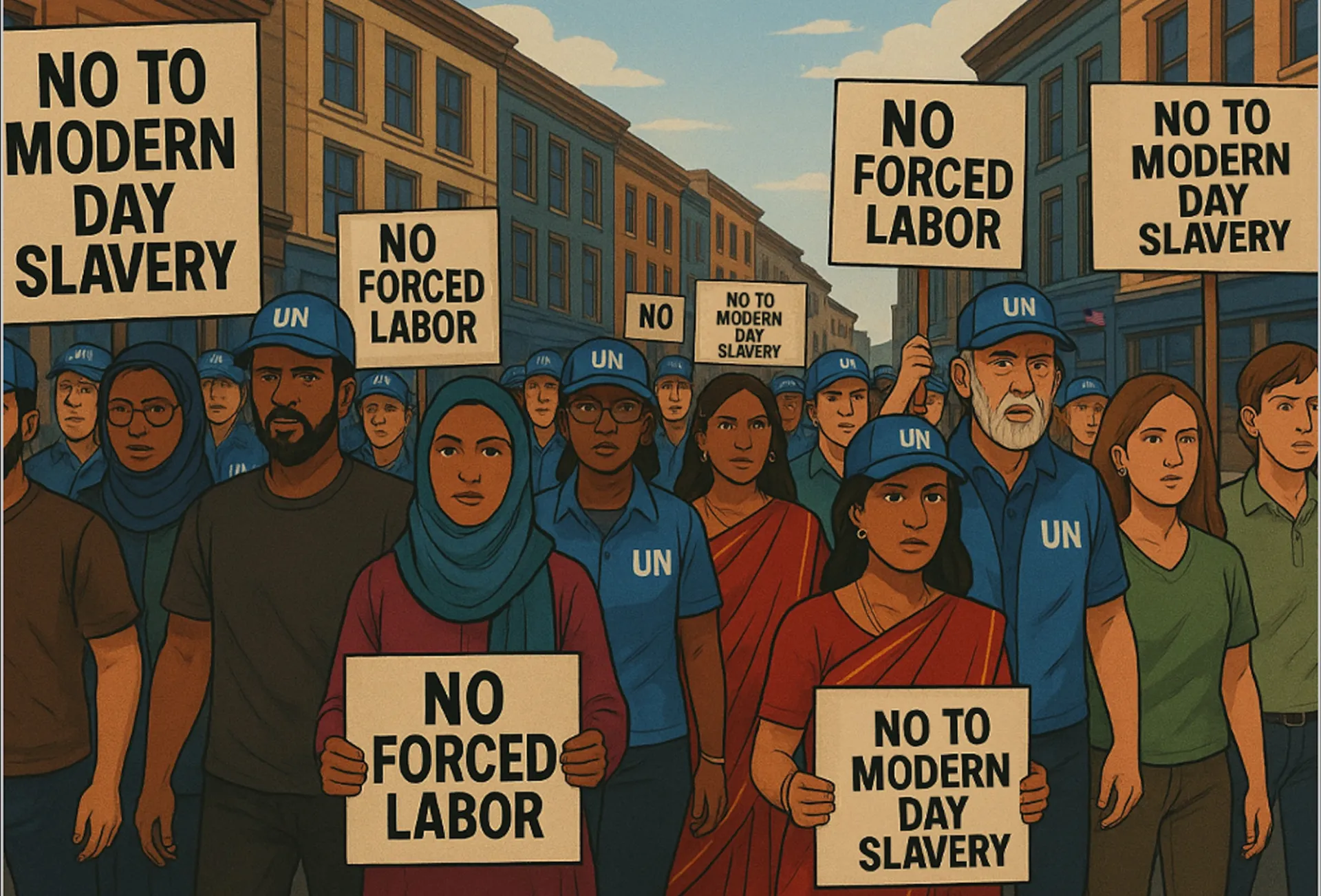
Despite the efforts of numerous actors across civil society, international organizations, governments, legal systems, academia, and the private sector, our world continues to grapple with the proliferation of modern slavery and human trafficking, with approximately 50 million individuals living in modern slavery, including 27.6 million in forced labor, and generating US $236 billion in illicit profits annually, as documented by the International Labour Organization, the Global Slavery Index, and the International Organization for Migration.
Yet despite decades of research into this issue, its persistence suggests deeper systemic and structural drivers causing modern slavery. Unfortunately, this heinous but omnipresent human rights violation cannot be resolved through measures such as criminal enforcement alone. Modern slavery persists not because people are excluded from economies, but because they are often included on exploitative terms—trapped in low-wage and informal work, abusive recruitment systems, excessive working hours, and debt burdens that can exceed several months to years of income to repay.
This is where multilateralism becomes essential: the economic forces that create vulnerability cut across borders and require coordinated global action. Through their mandate on setting norms, convening states and creating incentives, multilaterals play a decisive role in determining whether global economic systems entrench exploitation or expand inclusion and dignity.
Finance Against Slavery and Trafficking (FAST) is one such initiative, created to leverage multilateral actors’ convening power to bring the financial sector to the table and demonstrate that eliminating exploitation in value chains actually adds value.
FAST began as a financial-sector commission under the Liechtenstein Initiative, a public-private partnership formed by the Government of Liechtenstein, the Australia, and the Netherlands, with the United Nations University Centre for Policy (UNU CPR) serving as the Commission’s secretariat. Originally a policy research project, it has transformed into a UNDP-hosted platform that directly engages financial actors along with survivors committed to reforming financial systems.
From research to systemic change
The research undertaken in the initial phase of FAST made it clear that modern slavery is not just a criminal or justice issue, it is a financial systems issue. When UNDP assumed stewardship of the Initiative, it inherited this evidence base, as well as the mandate to work with governments, investors, regulators, and civil society to translate knowledge about exploitative labor practices into concrete action to end them.
In Thailand, the Democratic Republic of the Congo, Mexico, North Macedonia [JH1] and other countries, FAST has helped to integrate modern slavery risk mapping into national financing strategies, strengthened human rights due diligence and governments’ capacity to detect and act on suspicious financial activities, and design survivor-centered financial policies.
Building multilateralism that works: Including investors
FAST’s approach reflects an adaptive form of multilateralism—iterative, evidence-driven, and grounded in country’s realities. This cyclical approach strengthens the legitimacy and practicality of global governance—a central aim of the UN’s Financing for Development architecture.
A defining feature of FAST’s current advocacy-driven work is its insistence that lived experience is a strategic asset that is a necessary ingredient for systemic reform of finance and labor markets. The just-published Engaging People with Lived Experience: A Brief for Investors is a first-of-its-kind guide developed through consultations with survivors across multiple countries, including the Democratic Republic of the Congo.
The Brief for Investors demonstrates to financial actors how survivors perceive risks earlier, more accurately, and more holistically than datasets. These insights reveal weaknesses in supply chains, recruitment systems, subcontracting, and financial flows—giving investors sharper tools to identify material human-rights risks. In a fragmented ESG landscape, this is both a governance advantage and a value-creation strategy.
Financing the end of modern slavery: A new investment narrative
A global investment study commissioned by FAST aims to quantify the annual investment gap to eradicate modern slavery and human trafficking. The findings will inform a new Integrated-Impact Business Model, which connects the prevention of forced labor and human trafficking with long-term financial performance. This new framework reframes anti-slavery investment as both a risk-mitigation tool and a market opportunity aligned with the energy transition, climate resilience and supply-chain reform.
Why action on forced labor matters for multilateral governance
Multilateral initiatives like FAST demonstrate how academic research can inform practical models for country-level action aligned with global sustainability goals and powered by the lived experience of survivors. By bringing survivors and financial actors to the table, such initiatives show how global institutions can respond to systemic challenges—not through statements of intent, but through a shared commitment to reforming the financial systems that shape people’s lives.
As capital flows accelerate in the energy transition, and as global institutions debate the future of economic governance, FAST is bringing governments, markets, and affected communities together towards a common understanding of the social impacts of a market-based economy – and the financial risks posed by unchecked labor exploitation. Involving market players in data-driven actions on social issues does more than just reduce harm. It drives inclusive, resilient economies capable of preventing exploitation at its roots.
About the author:
Jill Huinder is the Coordinator of the Finance Against Slavery and Trafficking (FAST) Initiative at the United Nations Development Programme (UNDP). A specialist in finance and human rights, she works at the intersection of international policy, sustainable development, and multi-stakeholder coordination to advance financial and policy solutions addressing modern slavery and human trafficking. She is also a Doctoral Researcher at the UN-mandated University for Peace (UPEACE), where her research examines multilateralism and the role of global economic governance in sustaining and/or preventing exploitation.
The views and opinions expressed in this think-piece are those of the author and do not necessarily reflect the official policy or position of SIPA or Columbia University.
Photo Credit: The image was made with ChatGPT.