
Beyond the Mandate: UNHCR’s Cultural Challenge
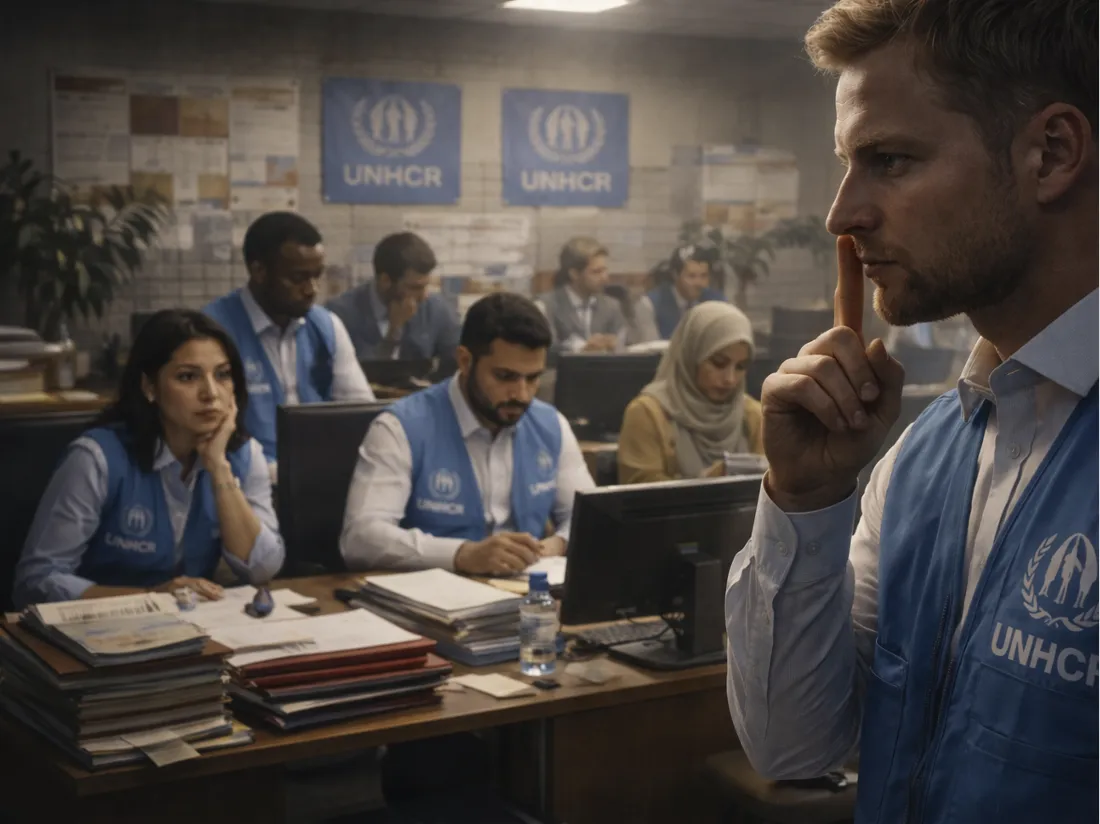
States set up UNHCR after World War II as a small legal body. Its task was to protect refugees and identify durable solutions. Over time, UNHCR evolved into a large international bureaucracy with an extended mandate. This evolution has not been matched by a corresponding cultural adaptation to today’s operating environment.
Many current failures in refugee protection do not primarily stem from hostile governments or reluctant donors. They stem from within the organization itself. At the strategic level, decisions are frequently delayed, diluted, or left incomplete. This is especially true when choices involve political, institutional, or personal risk.
When an organization faces stress, crisis, or high external demands, its internal divisions become more pronounced and more damaging. Ethical drift, defensive behaviors, leadership derailment, and risk avoidance reinforce hesitation. External pressure prevails precisely when timely internal decisions are avoided.
None of this suggests that UNHCR lacks commitment or professional expertise. On the contrary, the organization benefits from deeply internalized protection values and highly dedicated staff across operations. These strengths enable UNHCR to function under extraordinary political and operational pressure. The challenge lies less in motivation than in the cultural and structural conditions under which staff are expected to operate.
In these situations, UNHCR’s effectiveness depends less on its formal mandate and more on its organizational culture. What matters is whether protection responsibilities translate into action under pressure. Mandates alone no longer guarantee effective delivery. In my recent book, Beyond Principles? A Critical Look at UNHCR’s Organisational Culture, I argue that without cultural change, UNHCR risks losing relevance.
Cultural Drift as a Core Vulnerability
International organizations such as UNHCR have traditionally been characterized by centralized decision-making, predictable hierarchies and relatively stable environments. UNHCR’s internal culture remains anchored in these assumptions. Yet, the external environment has changed dramatically.
This mismatch is often described as cultural drift. It has become a central operational vulnerability. Cultural drift does not appear suddenly. It develops incrementally as assumptions and beliefs lag behind reality.
Hard decisions are postponed. Advocacy is toned down. Defensive routines such as silence, information distortion and shifting responsibility persist. Organizations rarely collapse overnight. Instead, they lose initiative, voice, and influence over time.
For UNHCR, the cost is measured in missed protection opportunities. Those delays affect people who cannot afford them: refugees, internally displaced people, and stateless people.
A Changed Global Environment
Forced displacement is now a high-politics issue. It influences border regimes, domestic power struggles, and geopolitical negotiations. Governments are increasingly restricting access to displaced populations and seeking to control narratives and outcomes.
Some donor states prioritize deterrence over protection. Regional blocs reinterpret humanitarian norms to fit national agendas. At the same time, information travels faster than institutional verification. Misinformation often shapes perception before facts are established.
Decisions that once took weeks must now be made within hours. A single misjudged signal can close political space. In this environment, mandates offer limited protection. What becomes decisive is judgment under pressure.
For organizations such as UNHCR, clarity of purpose matters. So do ethical consistency, trust, accountability, and the capacity to learn.
Why Culture Now Determines Outcomes
UNHCR is not culturally uniform. Variation exists across regions, operations, and leadership styles. Some teams have developed adaptive, protection-centered practices. These often perform better under pressure.
To respond effectively, UNHCR must evolve from a top-down bureaucracy into a more adaptive organizational model within intergovernmental constraints. One that empowers frontline staff to make timely decisions in fast-moving environments
This requires shared leadership and horizontal coordination. Authority must shift toward those closest to uncertainty. Staff must be supported in exercising judgment and taking initiative. Procedural compliance alone is insufficient.
Cultural change cannot remove political constraints. It cannot neutralize donor dependence. However, it can shape interpretation and response. It can determine how early risks are recognized.
Cooperation can no longer be the default assumption. The international environment is increasingly coercive. UNHCR must determine where quiet diplomacy is effective. It must recognize when escalation is unavoidable.
This requires a culture that accepts calculated risk. It must acknowledge that inaction can be as costly as action.
Why Cultural Change Is So Difficult
Changing organizational culture is difficult in part because senior leadership often underestimates the extent to which culture shapes organizational performance. Culture is frequently treated as a secondary or “soft” issue. It is not seen as a core determinant of decision-making, risk behavior, and institutional effectiveness, particularly under pressure.
For example, despite the central role of organizational culture in large-scale transformation, a 2024 UNHCR evaluation found that culture featured only marginally in the design documents for the 2017–2023 decentralization and regionalization process.
Changing organizational culture is also difficult because culture is rarely explicit. It is embedded in incentives, routines, and informal power relations. In organizations such as UNHCR, behavior is shaped by career signals. Staff learn which actions are rewarded and which carry personal risk.
During the recent financially driven downsizing, a 2025 UNHCR Ombudsman report revealed deep staff unease. Decisions following the abolition of posts were widely seen as influenced by managerial proximity and hidden agendas. This fed fears that staff labelled as problematic were more exposed.
At the individual level, risk avoidance often seems rational. Speaking up can carry costs, while silence is rarely sanctioned. Over time, this creates a gap between formal values and lived behavior. Protection principles remain rhetorically strong but operationally fragile.
Hierarchy reinforces these dynamics. Information moves upward selectively, shaped by anticipated senior reactions. This filtering is rarely intentional or malicious. It is driven by caution, loyalty, and fear of negative consequences.
Crisis periods intensify these patterns. Uncertainty pushes organizations towards familiar defensive routines. Short-term survival logic displaces learning and reflection. Avoidance feels safer than experimentation.
Cultural change, therefore, cannot rely on messaging alone. It requires changes to incentives, protections, and leadership behavior. Without such shifts, reform remains superficial. The organization adapts rhetorically while behavior stays largely unchanged.
How Internal Dynamics Weaken Protection
These patterns are not anecdotal. They recur across evaluations, surveys, and after-action reviews. Early and late warning information on displacement risks is delayed. It is filtered or not acted upon at senior levels.
Protection concerns are minimized to avoid political friction. Emergency responses stall due to silos. Staff at all levels hesitate to act on a no-regrets basis. Sustained stress drives defensive routines.
Mandates narrow. Responsibility shifts upward. These are recurring cultural patterns. They are not isolated failures.
When external pressure meets internal silence, protection is compromised. This does not reflect a lack of commitment. UNHCR benefits from deeply internalized protection values. Field staff show dedication and expertise. These strengths sustain operations under strain. However, they compensate for more profound weaknesses. They do not correct cultural constraints.
Why This Matters Beyond UNHCR
For scholars of multilateralism, this reveals a blind spot. Mandates and governance structures are insufficient explanations. Internal culture shapes organizational behavior. Leadership dynamics and psychological pressures matter.
For practitioners, the implications are immediate. Leadership development must prioritize judgment and conflict competence. Field insights must reach decision-makers without distortion. Staff must raise protection risks without fear. Organizational learning must be continuous.
The Takeaway
Four points warrant emphasis. First, organizational culture is now UNHCR’s most critical strategic asset. Mandate alone is insufficient. Second, internal behavior shapes protection outcomes. External politics is not the sole driver. Third, relevance will erode without cultural realignment. The environment will not wait. Fourth, the gap reflects structural and cultural lag. It does not reflect a lack of dedication. Organizational culture is not merely an internal concern. It is the condition under which refugee protection succeeds or fails.
About the author:
Martin Gottwald worked in the humanitarian sector from 1995 to 2024, including 25 years with UNHCR. He held senior protection and management roles across Latin America, Africa, Europe, and Asia, and also worked with OCHA and ECHO. Since 2004, he has published widely on refugee protection and UNHCR.
This think-piece is based on the author’s book Beyond Principles? A Critical Look at UNHCR’s Organisational Culture (Springer Nature, 2025).
The views and opinions expressed in this think-piece are those of the author and do not necessarily reflect the official policy or position of SIPA or Columbia University.
Photo Credit: The image was made with ChatGPT