
As the United Nations is turning 80, the World Must Recognize its Achievements
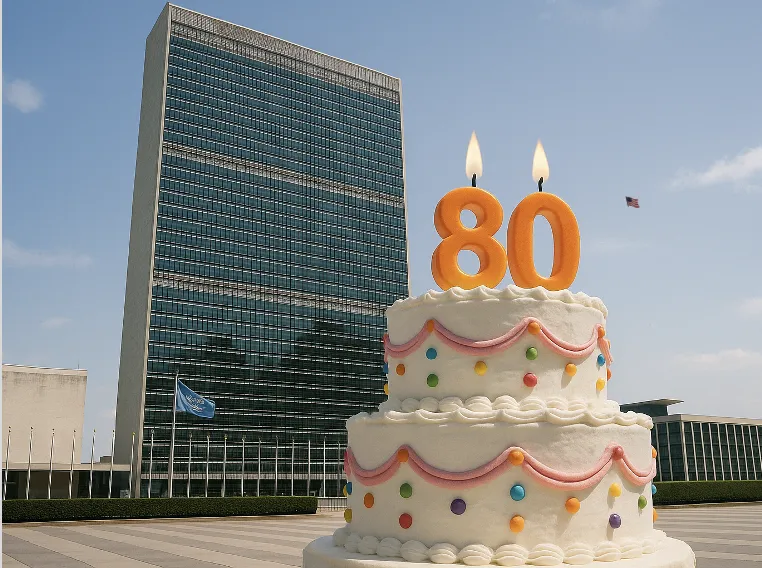
October 24th marks the 80th anniversary of the United Nations: the entry into force of the Charter of San Francisco, signed on June 26, 1945, including by the five countries that would have veto power in the Security Council—the United States, France, the United Kingdom, China and the Soviet Union. This decision gave rise to the most important multilateral organization that humanity has created. As the UN is turning 80, we must recognize its achievements and ensure the different parts of the world organization get the financial and political support they need to foster peace, uphold human rights, and promote development.
The US overcame its Isolationism and was Instrumental for the Creation of the UN
The formation of the UN was proposed by US President Franklin D. Roosevelt, with the aim of ensuring world peace. The League of Nations had been created after World War I, at the initiative of then-President Woodrow Wilson, and was embodied in the 1919 Treaty of Versailles, but the US Senate failed to ratify it. Furthermore, the League failed in its fundamental objective: to prevent another world war.
It is interesting that the US supported the creation, not only the United Nations, but also of the World Bank and the International Monetary Fund at the Bretton Woods Conference in 1944, and of the General Agreement on Tariffs and Trade (GATT), signed in 1947. In that sense, it can be said that the US was the promoter of multilateralism, and it is essential that it remain faithful to its principles.
The support for this international doctrine also represented a break with the so-called isolationism that had characterized US history, referring to a foreign policy of non-intervention in foreign affairs and international conflicts, especially in Europe, and which was particularly reflected in the country’s initial reluctance to participate in the two world wars.
The UN System promotes Peace, Human Rights, and Development
The UN agenda includes three fundamental principles: peace, human rights, and development. It developed a complex structure, including, first and foremost, the decision-making bodies of member states: the General Assembly, the Security Council, and the Economic and Social Council (ECOSOC). We should add the International Court of Justice, which resolves disputes between member states, and the Trusteeship Council, which is now inactive because it fulfilled its task of supporting decolonization.
The organization also has a broad set of organizations, including the UN Secretariat and its departments; funds and programs, such as UNDP , UNICEF, UN Women and UNCTAD; and specialized agencies such as the ILO, which was created in 1919 but became part of the UN, as well as UNESCO, WHO, FAO and, although it is sometimes forgotten, the World Bank and the IMF. Added to these major tasks is humanitarian aid, which has been critical, particularly in major conflicts. It does not include the World Trade Organization and, aside from the agreements on refugees and human trafficking, it has a limited role in the regulation of international migration.
The first objective, peace –or, in more recent terminology, security—, which has been the responsibility of the Security Council, has undoubtedly been the most complex task, both during the Cold War and in contemporary geopolitical conflicts. A truly complex problem is the failure, even by veto-wielding powers, to fully abide by the agreed commitments in this area. Nevertheless, this Council has halted complex processes and supported various countries in overcoming their internal conflicts. Since 2005, these processes have been supported by the Peacebuilding Commission.
Creating and Protecting Human Rights
The 1948 Universal Declaration of Human Rights represented a substantial advance in this field, adding economic, social, and cultural rights to the civil and political rights proclaimed by the French Revolution. Eleanor Roosevelt, wife of Franklin D. Roosevelt, played a pivotal role in its drafting and as the first chair of the UN Commission on Human Rights. A specific covenant on economic and social rights was approved in 1966. Additionally, to enhance the protection and promotion of rights worldwide, the UN Human Rights Council replaced the former Commission in 2006.
Decolonization and Development
Regarding development issues, it is worth stressing, first of all, the essential role that the UN played in the decolonization process, which greatly benefited Africa, Asia, and the Caribbean. In economic and social matters, it is worth highlighting the importance of UN summits and conferences since the 1970s, but especially since 1990, after the fall of the Berlin Wall. This year, two such events will be held: the Fourth International Conference on Financing for Development, held mid-year in Seville, Spain, and the Second Summit on Social Development, which will take place in November 2025 in Doha, Qatar.
The agreements reached at the conferences and summits are complemented by numerous international conventions or treaties, which become legal norms when adopted by member countries, and by the direct advice and support provided to countries by their many organizations.
The associated progress on economic and social issues has been complemented by major advances on environmental matters. They include the 1987 Montreal Protocol on the ozone layer, the launch of the 1992 Rio de Janeiro Earth Summit of the Conferences of the Parties on Climate Change, Biodiversity and Desertification, and the 2015 Paris Agreement on Climate Change.
In addition to these endeavors, the UN has served as a platform to create major global agreements on development goals, currently the Sustainable Development Goals, or SDGs, approved in 2015. Since the UN’s inception, its various organizations have established multiple support mechanisms for developing countries. Such mechanisms have seen active interaction with international and local civil society organizations, which have been essential partners in human rights and women's equality, among many other areas.
Despite Limitations, the UN is the most Important Multilateral Organization in History
It may be said that a major problem is that, due to its limited financial resources, the capacity of the UN to set global principles is not matched by a role in the implementation of the agreements, which is frequently in the hands of other organizations and nation states. This problem will be enhanced by the budget crisis that the organization is currently facing, which must therefore be overcome.
The world owes the UN recognition as the most important multilateral organization in history and, therefore, the commitment to continue supporting it in addressing today’s major challenges: geopolitical conflicts and international wars, multiple human rights violations, considerable international and internal economic and social inequalities in many countries, and the significant deterioration of ecosystems.
About the author
José Antonio Ocampo is Professor at Columbia University’s School of International and Public Affairs. He is a member of the Committee for Development Policy of the United Nations Economic and Social Council and served as chair of the Independent Commission of Experts on Financing for Development for the 2025 4th Conference on Financing for Development. He has occupied numerous positions at the United Nations, including as UN Under-Secretary-General for Economic and Social Affairs and Executive Secretary of the UN Economic Commission for Latin America and the Caribbean.
The views and opinions expressed in this think-piece are those of the authors and do not necessarily reflect the official policy or position of SIPA or Columbia University.
Photo Credit: The image was made with ChatGPT.