
Multilateralism isn’t just short of cash, it’s short of purpose. Future-proof the UN with ethics
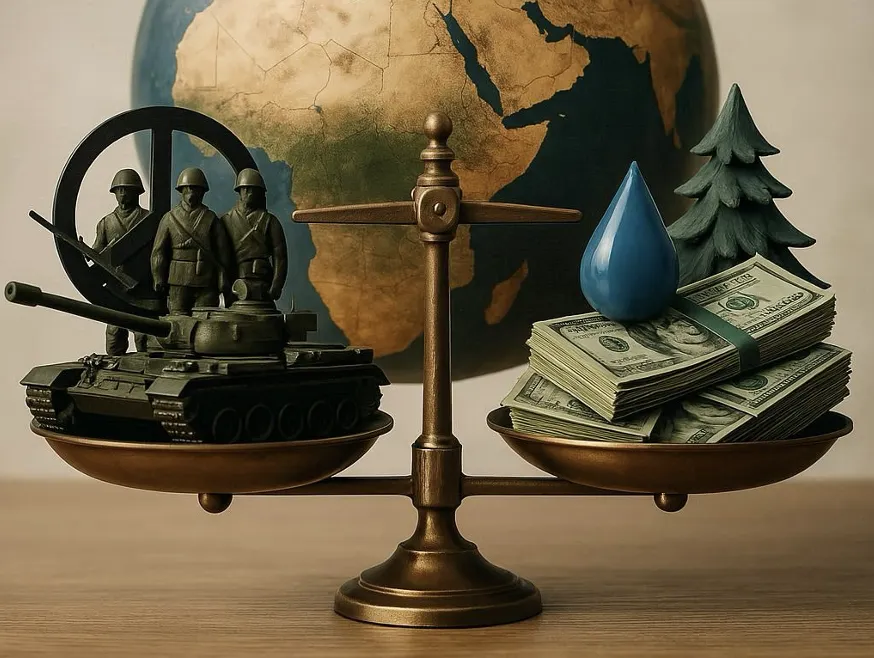
Today’s multilateral crisis is as much about whose values count as how agencies function. As power disperses and the universality of rights is increasingly contested, bureaucratic reform won’t save the UN. What might is building a version of multilateralism that is pragmatic, anchored in inclusivity and that can better address emerging global challenges, from AI to corporate power. Ethics won’t replace rights or law, but it may be the “new mortar” needed to hold a liveable and legitimate world order together.
A Crisis of Purpose, Not Just Process
2025 may be remembered for the collapse of a vision—the year the post-war multilateral system buckled under the weight of a world it no longer reflects.
The much-discussed “dual crisis” of funding and confidence has triggered a spate of reactive measures—budget cuts, hiring freezes, and plans for agency mergers. This is not, however, the radical rethink the system needs. Such moves are tinkering at the edges of a structure designed for a different era. And for many, particularly states across the Global South, the response feels not just insufficient, but profoundly tone-deaf.
In fact, this is not a liquidity crisis. Financial shortfalls are a symptom—a tool states are using to register their discontent and recalibrate global priorities. Nor is this strictly a crisis of confidence, though that too must be addressed. What we’re witnessing is a normative crisis—a clash of ideas about the world order we want, and who gets to define it.
At its core are long-standing grievances over how equitably the system functions: who holds influence, who makes decisions, and which global problems are prioritized (or ignored). Some states are also calling into question the principles the system was built upon, particularly universality as it pertains to human rights and international law.
Seen through this lens, today’s reform agenda falls flat. Making the UN more efficient or fit for purpose is important, but such improvements must come after the system is re-legitimized—not as a means to achieve that legitimacy. The present approach reverses that logic—a misconception that structural improvements will resolve deeper political fractures.
And perhaps this shouldn’t be surprising. The actors charged with “fixing” the system include those most invested in its current form—both professionally and ideologically. But just because the task is uncomfortable doesn’t make it any less urgent. The world needs a UN system that is futureproofed—robust, responsive and creative enough to solve challenges like AI, climate change and global inequality. And it needs to be of a form and nature that, even if not fully aligned with the preferences of every state, is at least livable for all. Only then can the system regain the legitimacy to function, and the trust to matter.
The Long Unravelling: How Power and Purpose Drifted Apart
To move forward, we must understand how we arrived here. Indeed, this crisis did not erupt overnight. Over the last decade a quiet but determined pushback against Western normative dominance has been gaining momentum, led by non-aligned states that view themselves as necessary counterweights to a system they see as exclusionary. This critique resonates strongly across the Global South, where many see Western hegemony as a barrier to development and a more equitable, multipolar world order.
This challenge has taken many forms, but most visible is the rejection—sometimes outright—of human rights. Increasingly, dissenting states present such norms, not as shared values, but as instruments of political leverage or neocolonial control.
This skepticism has historical roots. From the late 1940s through the early 2000s—an era often referred to as the Age of Human Rights—multilateralism was highly transactional. During that period, rights compliance was often the entry point to the “club of states” where decision-making happened, power was centralized, and development financing accessed. And the model worked: between 1965 and 1990, seven of the nine core human rights treaties were adopted, with near-universal ratification.
Today’s geopolitical landscape looks very different. Emerging powers like China and India no longer need Western approval or alignment to pursue their strategic goals. Others—Turkey, Brazil, Russia—are charting paths rooted in regional influence and alternate alliances. This power shift has empowered a parallel rejectionism among smaller states, many of whom now have access to capital and support from non-Western partners, and on less conditional terms.
Compounding this is the rise of populism and the erosion of normative leadership from within the West. Over the past decade, for example, the United States has exited, defunded or deprioritized core institutions and agreements—from the Human Rights Council, UNESCO and WHO, to key climate and migration frameworks. Domestically, it has reversed long-standing rights protections, undermining its moral authority on the world stage.
The result is a convergence: a large group of states—albeit for different motivations—moving in the same direction, creating a riptide of momentum challenging key precepts of the multilateral system. The solution to this will not be found in agency mergers, staffing cuts or efficiency drives. What’s needed is reinvention—a reimagining of both architecture and purpose.
Fixing the Structure Won’t Fix the System
For a moment, let’s think of the UN system as a structure built from bricks and mortar. The bricks are its agencies, the six principal organs, and multilateral bodies such as the Human Rights Council. The mortar is the shared value framework that binds them: chiefly human rights and international law. Over the decades, this combination has produced one of the most expansive governance systems in modern history.
Under a reimagined system, the bricks will likely remain; they may look a little different, but there is no fundamental pushback to these things existing. The mortar, however, is highly contested. Rightly or wrongly, these concepts are laden and polarizing. This is not to suggest that human rights be abandoned. They will continue to serve as critical benchmarks of protection, justice and accountability. But they cannot be the sole or primary basis for global cooperation. Simply put, the multilateral house cannot be rebuilt using the same glue that is now pulling it apart.
The job is thus to define a new framework—one with enough common ground to enable collective action, but flexible enough to accommodate disagreement without paralysis. That framework may already be within reach. Enter ethics: a method of reasoning that allows for critique, but without requiring normative compliance.
Ethics as the Missing Middle Ground
At first glance, ethics may seem too soft—overly subjective and lacking in the authority needed to protect the vulnerable, stop war and solve contemporary challenges. But in today’s gridlocked system, something with malleability may be exactly what’s needed.
Consider a government that criminalizes homosexuality under the banner of culture or religion. Under a human rights lens, the options are binary: condemn, sanction, isolate. An ethical framework does not abandon this critique but reframes it, allowing a community of states to express their disagreement. Human rights still belong in the conversation, but do not define it, creating more space for constructive dialogue—even when consensus remains out of reach.
Ethics can also operate where law and rights are silent or stuck. The last five years have seen egregious violations of international law—from territorial aggression in Ukraine to humanitarian catastrophe in Gaza. Legal frameworks exist but enforcement is paralyzed. Worse, the language of law is being weaponized by aggressor states to justify violence. Ethics offers an alternate terrain: one where allies otherwise constrained by strategic alliances or political calculus can challenge each other on moral grounds: We understand and respect your grievance, but your actions are wrong.
Perhaps most compelling is ethics’ potential to address contemporary global challenges that fall outside the bounds of current legal frameworks. Multinational corporations, for instance, are among the most powerful actors in the international system. They shape policy, own infrastructure and control vast data, yet are not bound by human rights treaties, and only marginally so by international humanitarian law. Ethics could help define expectations of corporate conduct.
The same applies to AI and other emerging technologies. While human rights provide valuable guardrails, it is ill-equipped to navigate all areas of risk—like automation, algorithmic bias, or transnational data flows. Nor does it provide a robust foundation for harnessing technological advances to achieve global public goods including around health, education and the environment. These are ethical dilemmas—ones that will determine the future of labor, dignity, and planetary sustainability. Without a moral compass, our ability to steer technological development towards future we want will be dangerously limited.
A new mortar for a new multilateralism
If 2025 marks the collapse of the multilateral system, let it also mark the beginning of its reinvention. Not a return to the past, but a hard reset—based on a sober recognition that the world has changed, and the system must change with it.
This next iteration of multilateralism will need to be built around the best of what states can live with, not what a few aspire to. Ethics may offer the best foundation for that compromise. This is not about abandoning human rights or international law. Those remain essential. But ethics can serve as a complementary logic—one that is less laden, more flexible, and better able to navigate the complexity of the 21st century.
The mortar that once held the multilateral system together is coming undone. That doesn’t mean the project is doomed. It means we need new mortar. Something anchored not just in legality or precedent, but in a shared moral imagination of the world we still want to build.
About the author:
Dr. Erica Harper directs Research and Policy at the Geneva Academy of International Humanitarian Law and Human Rights. A leading voice on international development, her work focuses on conflict resilience, disruptive technologies and multilateral effectiveness. With 20+ years across UN agencies, NGOs, and think tanks in the Middle East, Africa, and Asia, she currently heads major initiatives on AI, neurotechnology, and OSINT-based IHL monitoring. Her latest book, The Last 10 Percent: Why the World Needs a Leaner, More Innovative and Pragmatic Development Sector, Today was released in 2023.
The views and opinions expressed in this think-piece are those of the authors and do not necessarily reflect the official policy or position of SIPA or Columbia University.