
Communicating for a Better World: Lessons from the UN
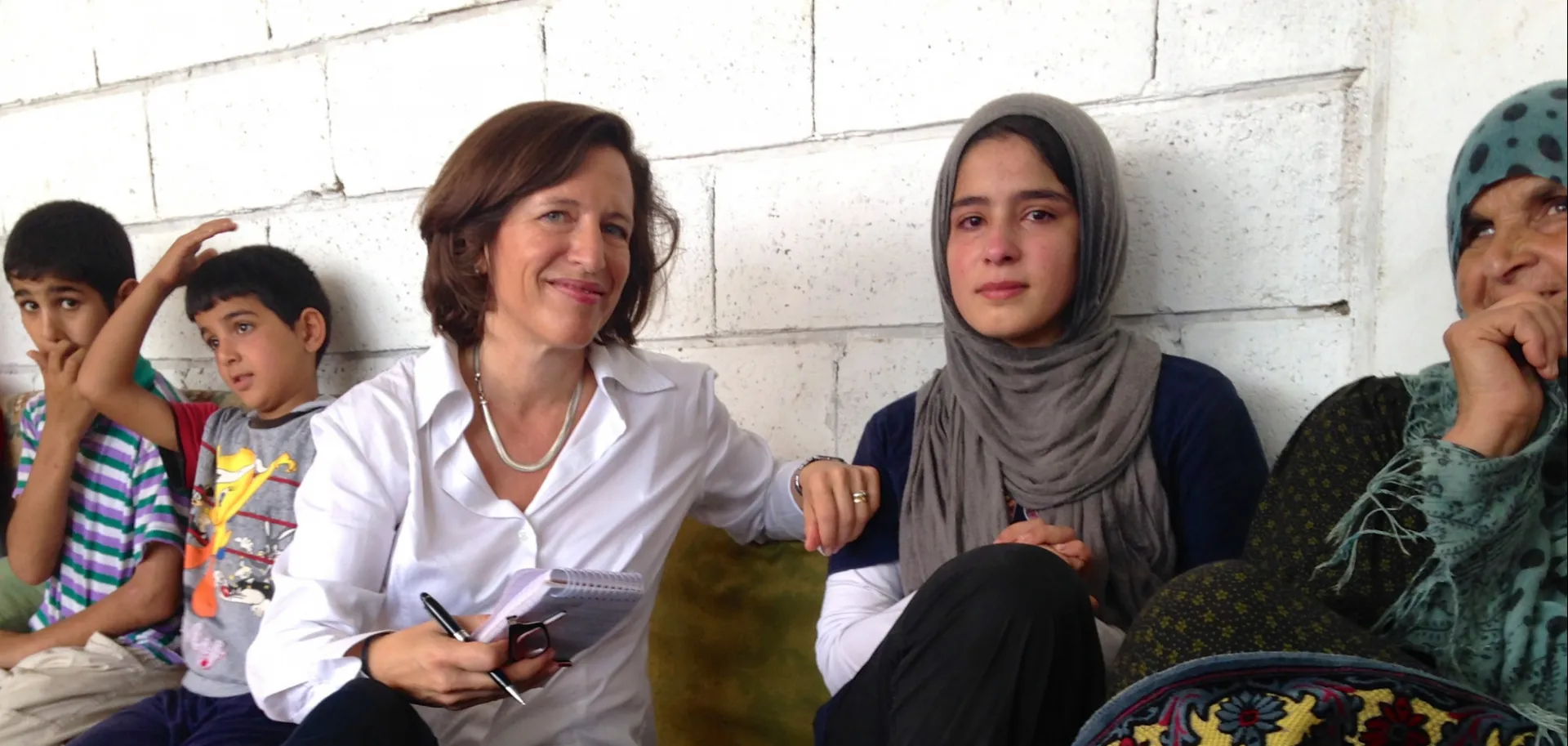
Five years ago, I heard a voice that broke my heart: A young girl in Afghanistan broke down live on air. “All my dreams are ruined,” she told the interviewer. “There's nothing left." Too afraid to use her real name, “Tarah” said she had been banned from high school. Her dream of studies, a professional career had crumbled overnight. Tarah said her only dream now was to leave Afghanistan for a place where she could learn. Her desperate appeal moved me to my core.
Five years on, things have only gotten harder. Afghanistan remains the only country in the world to ban girls and women from secondary and higher education. UNICEF estimates more than 2.6 million girls have been excluded from school since the Taliban returned to power in 2021. Wherever she is now, those five years have defined and shaped Tarah – along with every single one of those 2.6 million girls. The ban has almost wiped out two decades of progress, derailing millions of futures. Today, in this time of great tragedies worldwide, it is one of the greatest.
The UN will never stop fighting for the rights of Afghan women and girls. As we do that, we tell stories like Tarah’s. Why? Because of the numbing power of numbers. My job at the UN is to communicate about the state of the world. That means raising the alarm about a world that is on fire, and advocating for solutions to douse the flames. We communicate to drive change, and to revive hope in solutions. In that work it can be tempting to talk in numbers. After all, the UN has the statistics of suffering at its fingertips. The yawning gap between rich and poor, the brutal conflicts, more than at any time in the past eight decades, the difference one degree of global heating makes to our future. But it’s no good just giving people the facts and hoping they will spontaneously change the world.
Telling Stories to Raise Awareness
There’s a saying that “Statistics are human beings with the tears dried off.” UN communicators face a difficult challenge: We must find ways of communicating strategically to bring attention back to forgotten crises with advocacy that raises the alarm, gets people to care, and ultimately eases the dire situation for those on the ground. So how do we do that when audiences are so overwhelmed by all the desperate and competing humanitarian needs across the world?
Part of the answer lies in Tarah’s voice, a human story with the power to break through the emotional padding. I know for one that I will never forget that desperate appeal. That urgent young voice, full of indignation, innocence, and disappointment. That is the power of a story. This is a simple but important lesson for anyone passionate about building a better world. Anyone working not just for their own sakes, but also for the greater good.
The 3 “Ws”: What, Why Care, What Now
It’s not enough for audiences to simply know what is wrong. If we want them to act, we have to go one step further. Over the years I came up with a formula for communicating: the 3 ‘W’s. What, why care, what now. What we communicate gives people the facts. But it’s the “why care” that’s key. The human brain is wired to understand the world in stories. If we tell stories, audiences sit up and listen. If we do it right, they spontaneously start asking how they can help. That’s when we bring them the “what now.” The solution, the reason for hope, that appeals to the best of our human instincts.
Stories can give back Humanity
I know this formula works – in fact I’ve been on quite a journey with it. I was in college when I first understood the power of individual stories. I remember my history teacher more vividly than the others. He was a masterful storyteller. He held us all rapt. His lectures were about one of humanity’s darkest chapters – the Holocaust. The message he shared was full of horror, but we didn’t turn away, quite the opposite. Students who weren’t even enrolled stood in the back just to hear him speak. His vivid stories forced me to put myself in the shoes of the Nazis’ victims. They made me want to understand how humans could endure such suffering, and what drove the perpetrators to such evil. I learned that one of the first things the Nazis did was to turn their victims from names into numbers. After the war, telling their stories was a way to give them back their humanity. That knowledge set me on the path to where I am today. After college, I decided to pursue a Master’s in journalism so I could tell stories as my vocation. Stories to draw attention to injustice. Stories to open hearts. Stories to change the world.
Humanizing Refugees through their Stories of Hope
Fast forward to 2015, I was working for the UN Refugee Agency. Back then, around a million refugees arrived in Europe. I got to witness the best of humanity in the warm welcome offered to them by ordinary citizens, but then people began to get overwhelmed by the sheer scale of the crisis, and grew numb to the suffering of others. The welcome soured – votes and policies became more hostile. I knew we had to change our ways of communicating, so I went on a quest for individual stories to humanize the newcomers.
That’s when I met Doaa. Doaa was a young Syrian refugee, driven from her home by a brutal war. She and her fiancé, Bassem, couldn’t see a future where they were, so they put their lives in the hands of smugglers and looked to travel across the sea to Europe. Together with 500 others, they crammed onto an old fishing boat. After four days at sea, it sank. Many were killed instantly, while others hung onto wreckage to stay alive. After two days, Bassem lost his fight with the sea, leaving Doaa, who couldn’t swim, alone, looking after tiny babies among the dead. She sang and prayed with them, as they drifted another two days at sea, until at last they were rescued from their ordeal. Of 500 people, only 11 survived, including Doaa and one of the babies, Masa.
Doaa’s extraordinary story captured the world’s imagination. The book I wrote about her life, A Hope More Powerful Than the Sea, was published in more than a dozen languages. A young readers’ edition is being taught in US schools and a children’s book is underway. When I told that story in a TED talk, it got millions of views and thousands of comments from people wanting to know how they could help. That is a vital lesson for anyone seeking change: In times of overwhelming crisis, tell the human story behind the numbers. Reading this, you might be wondering, but which story should I tell?
Communicate Honestly in Your Authentic Voice
The easiest answer is staring back at you in the mirror: Every one of you have had experiences that have shaped you. Share them with the world, communicate honestly, in your authentic voice. People will listen. Soon they’ll be asking how to help.
Human stories are a great starting point, but there’s another huge challenge beyond the numbing numbers: our toxic information ecosystem. We live in an age of overwhelm: of too much information, and never enough facts. Of doomscrolling, apathy, and despair. Here too, we must change the conversation to give people back their agency and to show them they aren’t alone in crying out for change.
The Loudest Voices are often not the Majority
We have the statistics to back this up. Take climate change, for example. Two years ago, the UN and Oxford University published a landmark global climate poll. It showed that 80 percent of people around the world are demanding urgent action from their governments. That same year, a separate study found that 69 percent of people would contribute up to one percent of their own income to drive climate action. At the same time – and this is crucial – people massively underestimated how many other people would be willing to do so.
This tells us something important: If we listen to the algorithms, we get it badly wrong. Our feeds tell us – and this impacts the media and the politicians too – that the loudest voices are the majority. But this is a skewed reality, and it can be dangerous too – when people believe they are alone in wanting change. Too many are now afraid to speak up, to show leadership in demanding peace, or welcoming refugees. To call for an end to fossil fuels, or for regulations to reduce harms from runaway social media and AI. Yet take a step back, and we see the real global picture. Most people around the world want these things, but in a toxic information ecosystem few are inclined to yell and scream about it.
What now? Engaging Audiences on what they can do
That means communicating for a better world is not only about grabbing attention with stories. It’s also about showing people they aren’t alone, about bringing them into a community of changemakers, and rallying them around a common blueprint for change. That brings us to the last of the three ‘W’s. What now? We have the audience’s attention, they care, so what are we asking them to do? For us, that’s often, what is the UN doing? How can they support us in doing that? There’s a problem here, too: people have a limited capacity for doom and gloom. We lose them if we fail to offer hope.
Audiences want to hear about practical solutions to the world’s problems. That’s why we tell stories that celebrate people and places doing the right thing. My podcast, Awake at Night, does just that. I speak with UN staff in some of the world’s toughest places, giving them space to tell stories: About leaders bringing peace to communities, those tackling the climate disaster, displaced people building new lives. This kind of storytelling empowers audiences, and reminds us all that change is down to every one of us.
These are difficult times for changemakers, and for those that must communicate for a better world. Yet there is hope in the power of human stories, told by humans, for humans. Whatever you want to heal in this troubled world, I suggest you remember the three ‘W’s. What, why care, and what now. Explain what needs to change. Give people a reason to care. Inspire them with solutions. And above all, tell stories. You’ll find people leaning in to listen.
About the author:
Melissa Fleming is the UN Under-Secretary-General for Global Communications, leading an international team to inform audiences about the state of the world and build support for the work and goals of the United Nations. She oversees strategic and crisis communications, multilingual news and digital media platforms, information integrity, and global campaigns. Her career includes senior communications roles at UNHCR, the International Atomic Energy Agency, the Organization for Security and Co-operation in Europe, and Radio Free Europe/Radio Liberty.
She is the author of the book, A Hope More Powerful Than the Sea and hosts the award-winning UN podcast, Awake at Night. She holds degrees from Boston University and Oberlin College.
The views and opinions expressed in this think-piece are those of the author and do not necessarily reflect the official policy or position of SIPA or Columbia University.
Photo Credit: Melissa Fleming