
UN Peacekeeping’s Quiet Success: Preventing Violence Between Neighbors
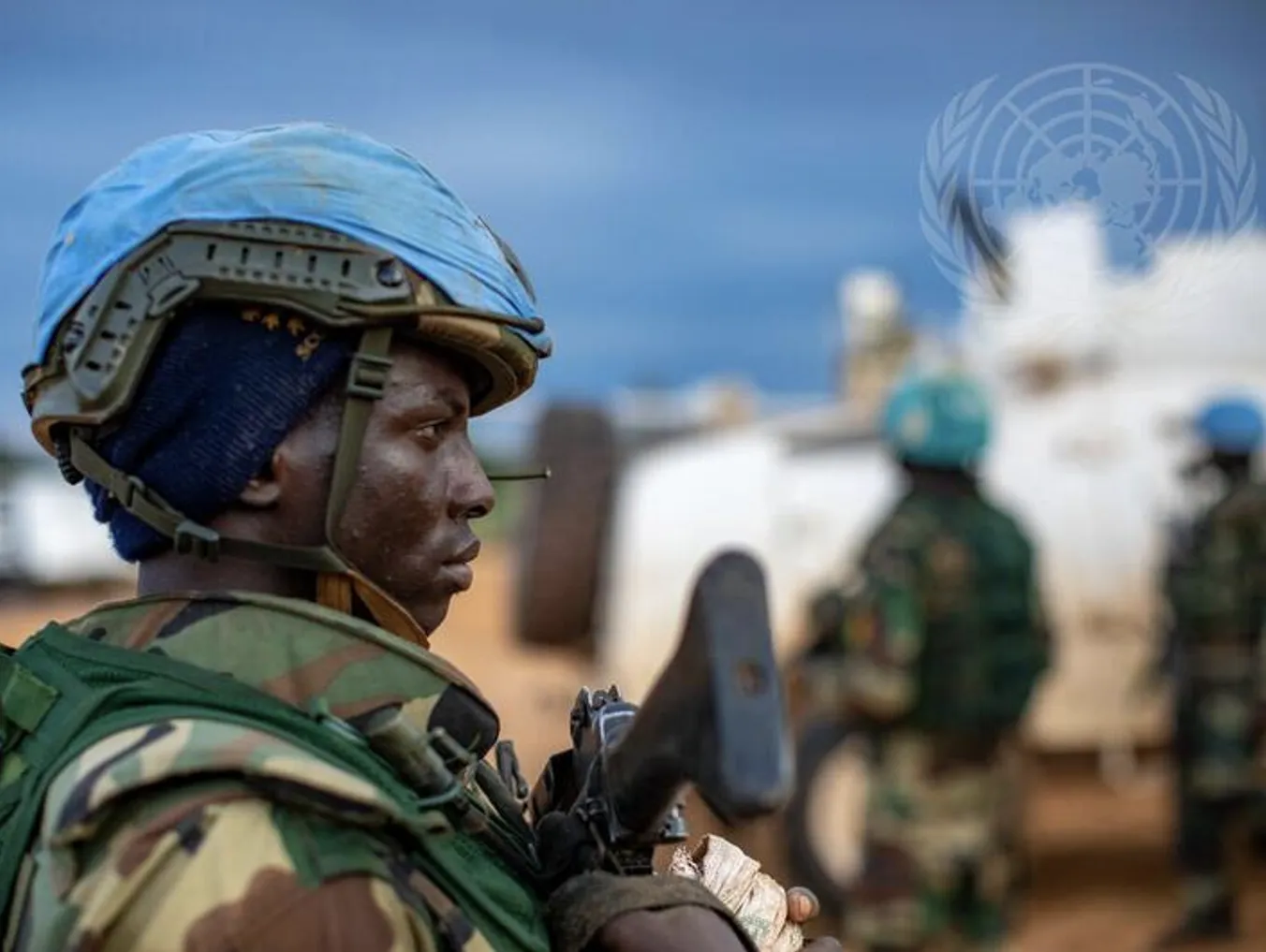
On 8 October 2021, representatives from Dogon and Fulani ethnic groups living in 12 villages gathered in Ogossagou, in central Mali, to sign a peace accord. The ceremony followed Dogon attacks on Fulani villages that had killed roughly 160 Fulani civilians in March 2019 and 31 more in February 2020. The signing took place inside a 150-peacekeeper base run by MINUSMA, the UN mission in Mali, whose patrols had made the agreement possible. Around Ogossagou, villagers were planting millet for the first time since 2017.
In June 2023, following a demand from the Malian government, the UN Security Council voted to end MINUSMA, which had first deployed in 2013. While international attention has focused on the fighting between the Malian government and the extremist group JNIM, the agreements most at risk are local, village-to-village accords like the one signed in Ogossagou. In my book, Local Peace, International Builders (Cambridge University Press, 2025), I argue that UN peacekeepers, perceived by communities as impartial mediators of their disputes, are uniquely effective at fostering peace between neighbors from different ethnic groups. As member states shrink UN peacekeeping, shedding missions, troops, and money, the world loses one of its most important tools for reducing violence in fragile settings.
The violence peacekeepers actually contain is between neighbors, not elites
Scholars, policymakers, and aid groups typically refer to fighting between civilian communities and their militias asintercommunal. This type of violence differs from civil wars where government militaries battle extremist organizations or separatist forces for control over territory or populations. Yet intercommunal violence has killed nearly 250,000 people in sub-Saharan Africa since 2000, more than government militaries, extremists, and separatist rebel groups combined. Examples range from central Mali between Dogon and Fulani, to eastern Congo between Hema and Lendu, to South Sudan between Dinka andNuer. And climate change makes these disputes worse and more frequent by straining the grazing land and water the communities share.
The modern UN mission was rebuilt for the work of protecting civilians embroiled in intercommunal violence. In 1999, the Security Council gave UNAMSIL, the UN mission in Sierra Leone, the first explicit mandate to protect civilians under imminent threat. Today, more than 90 percent of UN peacekeepers serve under mandates authorizing force to defend civilians. Patrolling communities and mediating intercommunal disputes are critical components of these duties.
The book tracks outbreaks of intercommunal violence and the deployment of UN troops across sub-Saharan Africa from 1999 to 2019. I then evaluate the ability of peacekeepers to reduce violence using statistical models that account for other explanations. The pattern is clear: where peacekeepers went, intercommunal violence fell. Sending 1,000 peacekeepers to a region with disputing communities cuts the risk of intercommunal violence in half. Sending 5,000 peacekeepers all but eliminates the chance of violence breaking out.
Civilians trust UN peacekeepers because they read them as impartial
Communities cooperate across identity lines when the consequences of attacking a neighbor are greater than those of talking. International actors can tip that balance by threatening whichever side escalates first. Yet the effectiveness of that threat depends on the interveners’ ability to convince locals that they are impartial. When civilians believe the external force will punish whichever side escalates, whoever it is, cooperation becomes less risky than conflict, and disputes do not become violent. If communities perceive outsiders as biased in favor of the other party to the dispute, then they have no reason to believe the external force will stop them from attacking. Impartiality, not firepower or mandate, is what separates these two outcomes.
UN peacekeepers reduce intercommunal violence because communities perceive them as impartial. Three institutional features produce that impartiality. The first is multilateralism itself. The UN is a multilateral organization branded in conflict and post-conflict settings as a peacemaker rather than as an instrument of any one state. Local populations do not associate it with the interests of a specific ethnic, religious, or tribal group. That brand gives individual peacekeepers what I call a veil of multilateralism. Even when a Senegalese or Bangladeshi platoon is the force civilians see on the road, the flag it carries is the UN’s. Its operations read as UN operations, not as one capital’s agenda.
The second is the diversity of the force. The UN draws its troops from 193 member states, and the national composition of any given mission rotates over time, so no single troop-contributing country’s identity becomes fused with the mission’s. The organization reinforces this by not sending soldiers from former colonial powers into former colonies to serve in patrolling roles, a deployment in which civilians would read the incoming troops as biased from the start.
The third is the rules of engagement. UN peacekeepers are authorized to use force only in self-defense or to protect civilians. That restraint is often mistaken for weakness, but it is what allows a patrol to pass through a village without the village reading it as a combatant. Civilians see a force that could target any of the community members or factions present, but does not.
Malians trusted the UN’s blue helmets, not French soldiers
Mali was one of the UN’s toughest missions from start to finish. In January 2012, separatists from the Tuareg ethnic group rebelled in the north. Within months, extremist Tuareg factions allied with al-Qaeda had sidelined secular groups and seized the major northern cities. When the rebels began marching toward the capital in January 2013, France launched a military intervention and counterinsurgency operation to push the extremists back. MINUSMA followed that April, drawing troops from dozens of countries under a mandate to protect civilians.
Malians perceived the two forces differently. They saw French soldiers as a partisan extension of Paris, the old colonial power, backing one armed faction against another. They saw UN peacekeepers as an outside force without a clear stake in who won.
In 2016, I conducted a study with 512 Malians in Bamako to investigate whether these differing perceptions affected their willingness to cooperate with members of another ethnic group. The participants were invited to play a cooperation game with a stranger from another ethnic group. Each was told at random who would enforce the rules: UN peacekeepers, French soldiers, or no one. Those expecting UN peacekeepers cooperated about a third more than those expecting no one or French soldiers.
One 22-year-old man told me he preferred the UN because “it did not colonize Mali and therefore will not target any interests.” Malians expecting French enforcement said the opposite. “France supports the Tuareg rebels,” one said.
Perceptions of impartiality drove the difference. In a follow-up survey with 874 Malians in Bamako and central Mali, the two forces looked alike on every trait but one. In central Mali, nearly 80 percent described UN peacekeepers as impartial. Fewer than 40 percent said the same of French soldiers.
The record on the ground matched what Malians said. In early 2021, British peacekeepers with MINUSMA ran a 28-day patrol between Gao and Tassiga through villages abandoned after extremist attacks. A senior Malian officer said the patrols gave villagers “a breath of life.”
Mission closures and budget cuts endanger the UN’s success
Despite the success of UN peacekeepers at the local level over the past 25 years, the UN Security Council is limiting, if not ending, existing peacekeeping mandates and refusing to authorize new ones. MINUSMA withdrew entirely in December 2023. MONUSCO, the UN mission in the Democratic Republic of the Congo, left South Kivu in April 2024. Its remaining mandateruns only through December 2026. There have been no new missions with a protection-of-civilians mandate in over a decade.
Funding for peacekeeping operations is similarly being drawn down. The $5.4 billion peacekeeping budget for the year beginning July 2025 is down from a 2015 peak of $8.3 billion. The United States, which pays about a quarter, rescinded $393 million in 2025. The White House’s 2027 budget request zeroes out the remaining $1.2 billion. The Secretary-General’s own reform plan proposes a further 15 percent cut.
Cuts to mandates and funding threaten the future of UN peacekeeping operations and, with them, the future of intercommunal peace around the world. The peace signed between Dogon and Fulani communities in Ogossagou was possible because both sides knew that UN peacekeepers stood behind the agreement and would uphold it, regardless of who violated its terms. Whether such agreements remain possible depends in large part on the presence of external actors who can impartially mediate intercommunal disputes.
About the author
William G. Nomikos is an Associate Professor of Political Science at UC Santa Barbara, where he directs the Data-driven Analysis of Peace Project research lab. He is the author of Local Peace, International Builders: How UN Peacekeeping Builds Peace from the Bottom Up (Cambridge University Press, 2025).
The views and opinions expressed in this think-piece are those of the author and do not necessarily reflect the official policy or position of SIPA or Columbia University.
Photo Credit: UN Photo/Harandane Dicko