
The UN’s Political Missions Are Surviving. But Can They Still Adapt?
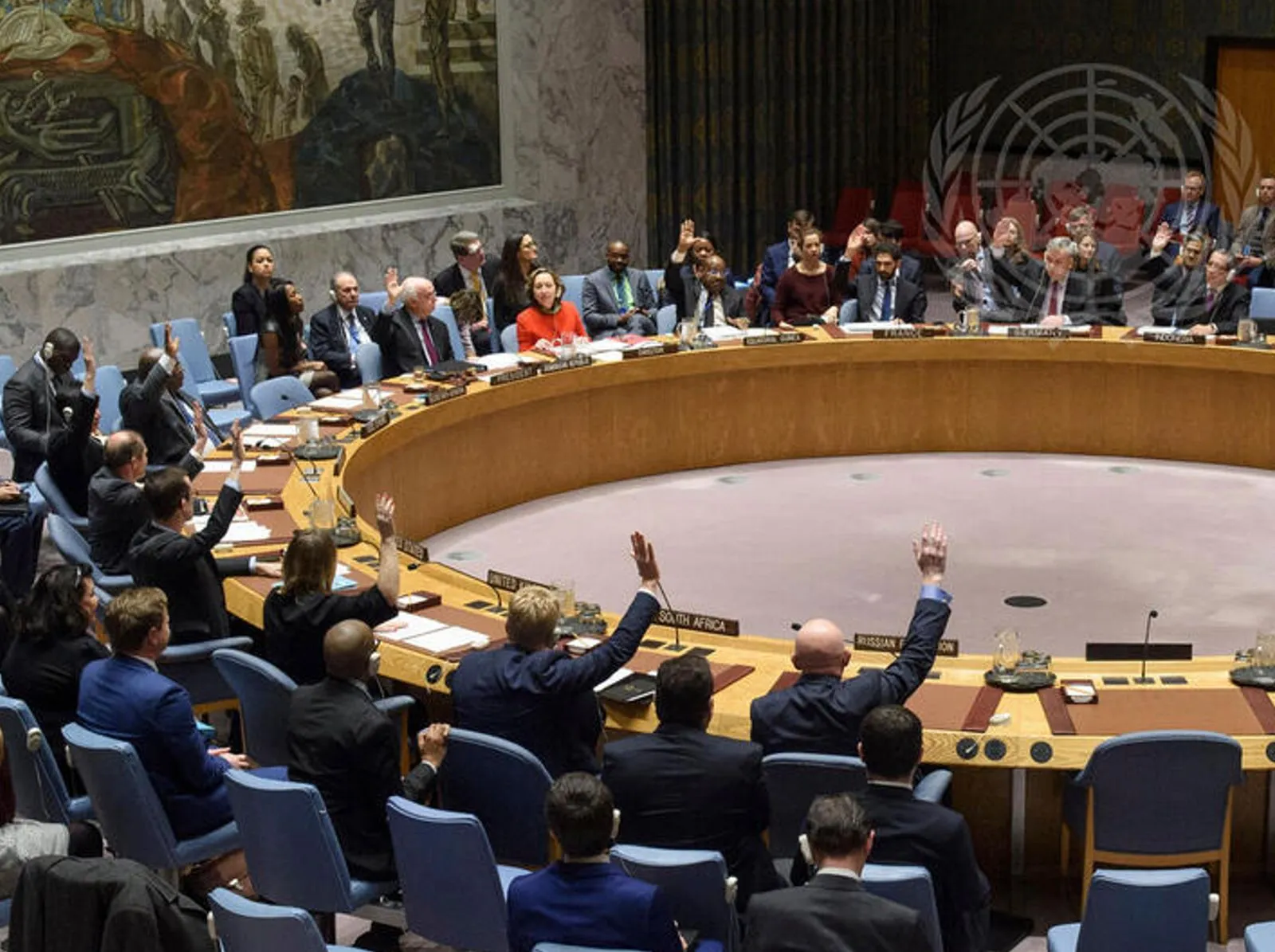
The Security Council has found ways to keep political missions running through years of division. It now needs to make better use of each mandate renewal: to ask what has changed, what a mission can actually do, and whether its mandate needs more than another small edit.
A Security Council vote can keep a UN mission in place. It cannot, by itself, give that mission access to political leaders, persuade armed groups to negotiate, or make a peace process viable. Our research suggests that the routines of renewal are more firmly established than the mechanisms for bringing lessons from the field into mandate negotiations.
That gap is at the heart of our Columbia University SIPA capstone report, Mandate Design Under Strain: Evolution of Security Council Practice on Special Political Missions (2010–2026), prepared for the UN Department of Political and Peacebuilding Affairs (UN-DPPA). Our central finding is not that political missions have failed. It is that the Council’s ability to renew them has proved more durable than its ability to rethink their mandates. We argue for treating each renewal as a serious policy review, informed by what mission staff have learned in the field.
Agreement is not the same as progress
Special Political Missions (SPMs) are largely civilian UN operations that support mediation, political transitions, conflict prevention and other forms of political engagement. The category also includes specialized operations, so not every SPM is a country-based mediation mission. As of September 2025, the UN operated 40 active missions ranging from supporting political processes in Afghanistan and Libya to monitoring a specific agreement in Yemen.
Our research draws on historical data from 1948 to 2026 and examines Security Council mandate cycles in detail from 2010 to 2026. About 87 percent of the mandate cycles studied were adopted unanimously or without a vote. At the same time, contested renewals increased, especially after 2017. This is less contradictory than it sounds: Council members can agree to keep a UN presence while disagreeing about the conflict, the mission’s priorities or how far it should go.
The routines of renewal have also remained remarkably consistent. Twelve-month mandates are common. The penholder—the Council member that leads drafting and negotiations on a resolution—is often one of the United States, the United Kingdom or France. And changes to mandates usually come through additions and adjustments to existing tasks rather than a wholesale redesign. We call this “adaptive stability”: the system bends, but generally within established habits. Those habits can preserve useful diplomatic engagement. They can also allow old assumptions to survive long after circumstances have changed.
Five cases, different lessons
Colombia shows why a focused mandate can help. The UN Verification Mission began with a clear role linked to a peace agreement and the parties’ consent. As its remit widened into more contested areas, Council support became harder to maintain. The lesson is not that mandates should never expand; it is that expansion requires renewed political backing, not just new language.
Haiti shows a Council willing to change priorities as conditions deteriorate. But revising a list of tasks is not the same as improving the security and political conditions needed to carry them out. Libya makes that limitation especially plain: fragmentation among domestic actors and outside powers can restrict what a political mission can achieve, however carefully its mandate is drafted.
Afghanistan shows the case for more fundamental change. The Taliban’s return to power in 2021 altered the political setting in which the UN Assistance Mission in Afghanistan (UNAMA) worked. The Council revised its mandate substantially, while the mission had to adapt its operations as access and conditions shifted. When the underlying political order changes, minor annual edits may simply not be enough.
Yemen shows why the structure of the UN presence can matter as much as the wording of a mandate. The UN Mission to support the Hudaydah Agreement (UNMHA) carried out targeted monitoring alongside the broader diplomatic work of the Secretary-General’s Special Envoy. In January 2026, the Security Council approved a final extension of UNMHA’s mandate through March 31 and directed preparations to transfer its remaining functions to the Special Envoy’s office. The decision illustrates a practical question raised in our report: when should separate UN arrangements be coordinated more closely, redesigned or wound down?
None of these cases proves that a particular mission succeeded or failed. Our study analyzes mandate design, Council negotiations, and operational constraints; it is not a definitive evaluation of mission effectiveness. But it does show why a renewal vote is a poor substitute for examining what a mission can realistically deliver.
Make renewal a real review
What would change in practice? Before each renewal, UN-DPPA and mission leadership could provide Council members with a short, candid assessment organized around four questions: Which mandated tasks have been carried out? Which have been blocked, and why? What has changed politically since the last renewal? And which responsibilities now need to be kept, narrowed, sequenced or redesigned? The Council’s penholder and other members should consider that assessment before the draft resolution is effectively settled.
The answer should sometimes be a modest adjustment. But sometimes it should be a larger overhaul. If a mission has lost the political access on which a task depends, repeating the same instruction year after year does little good. The Council should decide whether to change the task, supply the missing support, alter the mission’s structure or state more honestly what the UN presence can achieve. In fast-changing settings, carefully bounded flexibility to adjust priorities or operating methods could help missions respond between renewals.
A shorter mandate can also be useful when events are moving quickly, but only if the Council knows what it wants to learn before the next vote. Otherwise, a six-month renewal risks becoming the same negotiation held twice as often. The point is not to rewrite everything every year. It is to make continuity a choice supported by evidence rather than a default.
This would not remove politics from the Security Council. Nor would it replace the judgment of Special Representatives and envoys, whose relationships and experience matter enormously. It would give their field assessments a clearer route into Council decisions. It would also help members distinguish between a mission that needs more support, one that needs a different mandate, and one whose limited but valuable role is simply to keep dialogue alive.
What should count as success?
Political missions do not always end wars or deliver settlements. Sometimes they preserve a channel for negotiation, maintain international attention or create space for a future agreement. Those contributions matter. But the Council should be able to say plainly when that is the mission’s purpose—and design its mandate accordingly.
The UN’s ability to sustain political missions through division is worth protecting. Our research suggests the next test is whether the Council can be equally serious about changing them. At each renewal, it should ask not only “Can we agree to keep this mission?” but “Given what we know now, what should this mission actually be asked to do?”
About the authors
Ahad Bakhit is a Master of International Affairs student at Columbia SIPA, Class of 2027. Ahad has contributed to research on UN Special Political Missions through a collaborative capstone project with UN Political and Peacebuilding Affairs.
Anoushka Joshi is a strategic communications professional and a graduate of Columbia University (MIA, BA). She previously served at the U.S. Mission to the UN and is proficient in French, Spanish, and Arabic.
Aruzhan Boranbayeva holds an MIA from Columbia SIPA, specializing in international security policy, peacebuilding, and conflict resolution. Her professional background includes policy research, risk assessment, and data analysis.
Homaira Sharifi is a 2025–2026 Institute of Global Politics Scholar (IGP) and an MPA candidate at Columbia SIPA, studying International Security and Diplomacy. She previously worked with ICRC Kabul supporting humanitarian operations across Afghanistan.
Jiani Jiang is a Master of International Affairs graduate from Columbia SIPA, Class of 2026, currently working at Bank of China. She has contributed to UN-focused research on Security Council mandates, international diplomacy, and Special Political Missions.
Mohammed Ibrahim is a diplomat and political affairs expert with extensive experience in African and Middle Eastern politics, conflict resolution, mediation, and multilateral diplomacy. Columbia University alumnus, Class of 2026, specializing in International Conflict Resolution.
Rukhsar Balkhi holds an MIA from Columbia University, where she specialized in UN and International Organization Studies, and an MSc from Oxford’s School of Global and Area Studies. Her work focuses on multilateral diplomacy, UN history, and global governance.
Wanonno Iqtyider is a dual-degree master's student at Columbia SIPA and the University of Tokyo, specializing in international security and diplomacy. His interests include UN peace operations, conflict resolution, multilateralism, and international development.
This think-piece is based on the author’s SIPA Capstone Report UN Special Political Missions: Charting the Past and Future of UN Diplomacy in the Field.
The views and opinions expressed in this think-piece are those of the author and do not necessarily reflect the official policy or position of SIPA or Columbia University.
Photo credit: UN Photo/Loey Felipe